
"Pacific island coffee"
1000 article(s) found

A brief introduction to the history and culture of the origin and development of Ecuadorian boutique coffee beans with balanced and refreshing taste
However, Thomas will never know that the island they landed on is the only island in the Galapagos Islands with plenty of fresh water. It is today's St. Cristobal Island (Saint Cristobal), a well-known South American brand, Ecuadorian Grade A coffee, with a large state-run seed value garden; 100% from the 1300-2000 m high natural vegetation zone, popular in Europe and the United States.

A brief introduction to the cultivation of fragrant Ecuadorian boutique coffee beans, geographical location, climate and altitude
In fact, Ecuador means the Spanish equator. Due to the use of old-fashioned traditional harvesting and handling methods, Ecuadorian coffee is not listed as a boutique coffee, so it is generally rarely seen. Ecuador faces the Pacific Ocean, and near the equator, about 900km west of longitude 90 degrees, there is a Galapagos archipelago (Galapagos Island).

Introduction to the species of coffee beans in Papua New Guinea
Papua New Guinea is an island country in the western South Pacific and a member of the Commonwealth. The name of the country consists of Papua and New Guinea. There are many small islands here, about 600 in size. It is adjacent to Indonesia and Australia to the south. It belongs to the Asia-Pacific region, but it is a country in Oceania. Located in the tropical climate, high temperature and rainy. Rich and rich volcanic rock and soil
Fragrant Hassanda Coffee Garden in Ecuador Origin and Development of Fine Coffee History and Culture
In the mid-15th century, there were legends about enchanted mysterious islands among fishermen fishing in the western Pacific Ocean of South America. It is said that the islands can sometimes be seen clearly from a distance, but when the ship approaches, it disappears again; sometimes it looks like a galleon, sometimes it shows the shape of a witch. The fishermen called these islands Magic Island and thought it was there.

Galapagos coffee producing area Galapagos coffee flavor
Coffee Doudou is really picky about the environment in which it grew up. First of all, it must live in the upper level (altitude), warm and humid climate, sunny and shady, fertile soil and plenty of water, cool but not too cold. I like warmth but not too hot. Most of the places that meet these conditions are in the tropics between latitudes 25 and 25 at the center of the earth's equator.

Introduction to Galapagos Coffee
Following caf é (Wechat official account vdailycom) found that Coffee Doudou is really picky about the environment in which it grew up. First of all, it must live in a high level (altitude), a warm and humid climate, a sunny and shady climate, a rich soil and plenty of water, cool but not too cold, warm but not too hot. To meet these

Taste balanced refreshing Ecuadorian fine coffee varieties cultivation market price profile
In 1535, Frei Thomas de Berlanga of Spain and others accidentally discovered the Galapagos Islands. Thomas was born in 1487 on the Duro River in the Spanish province of Soria. He was the fourth bishop of Panama at that time. He was ordered to go to Peru. When his ship set out from Panama on February 23, under the impact of a strong current, they were carried to an unknown sea in the outer ocean.

A brief introduction to the cultivation of balanced and refreshing Ecuador boutique coffee beans, geographical location, climate and altitude
In the mid-15th century, there were legends about enchanted mysterious islands among fishermen fishing in the western Pacific Ocean of South America. It is said that the islands can sometimes be seen clearly from a distance, but when the ship approaches, it disappears again; sometimes it looks like a galleon, sometimes it shows the shape of a witch. The fishermen called these islands Magic Island and thought it was there.
Introduction to the Origin of High-quality Coffee beans in Ecuadorian Coffee Flavor
The best Ecuadorian coffee is grown on St. Cristobal Island in the Galapagos Islands, which has the unique natural geographical conditions for giving birth to the best quality coffee in the world. A cup of Galapagos coffee, like the beautiful scenery of the Galapagos Islands, is sure to impress you. In the mid-15th century, fishermen fishing in the western Pacific Ocean of South America were in the middle stream.

Introduction to the characteristics of Ecuadorian Coffee Grinding degree of Coffee in producing areas
The best Ecuadorian coffee is grown on St. Cristobal Island in the Galapagos Islands, which has the unique natural geographical conditions for giving birth to the best quality coffee in the world. A cup of Galapagos coffee, like the beautiful scenery of the Galapagos Islands, is sure to impress you. In the mid-15th century, fishermen fishing in the western Pacific Ocean of South America were in the middle stream.

Ecuadorian Coffee Flavor and Taste Manor introduction to the characteristics of Ecuadorian coffee beans in Hasunda Coffee Garden
In the mid-15th century, there were legends about enchanted mysterious islands among fishermen fishing in the western Pacific Ocean of South America. It is said that the islands can sometimes be seen clearly from a distance, but when the ship approaches, it disappears again; sometimes it looks like a galleon, sometimes it shows the shape of a witch. The fishermen called these islands Magic Island and thought it was there.

The results of cup test on grinding degree and roasting degree of fine coffee beans from Ecuador's Hasenda coffee garden
ES coffee is a clean organic coffee grown on the slopes of the Latin American Andes. It is 100% pure coffee, and the quality of our coffee has been safeguarded and enhanced through efforts to improve the economic and working conditions of the plantations, while maintaining the small-scale coffee plantations and the diversity of the organisms in the gardens. In addition, it is one of the most important economic sources of coffee origin.
A brief introduction to the treatment method of grinding degree and baking degree of fragrant Ecuadorian boutique coffee beans
Ecuador faces the Pacific Ocean, and near the equator, about 900km off its west coast, near the equator at 90 degrees west longitude, there is also a dependency of the Galapagos Islands (Galapagos Island), also known as Cologne, which produces the famous Galapagos coffee. In order to protect the natural ecology, the Ecuadorian government has designated the archipelago as a national park and banned the use of chemical fertilizers, pesticides and other chemical agents.
Introduction to the Flavor and Taste of Coffee Manor in Ecuador
The best Ecuadorian coffee is grown on St. Cristobal Island in the Galapagos Islands, which has the unique natural geographical conditions for giving birth to the best quality coffee in the world. A cup of Galapagos coffee, like the beautiful scenery of the Galapagos Islands, is sure to impress you. In the mid-15th century, fishermen fishing in the western Pacific Ocean of South America were in the middle stream.

Introduction to the description of the Flavor of Coffee varieties in Santa Cruz Manor, Ecuador
The best Ecuadorian coffee is grown on St. Cristobal Island in the Galapagos Islands, which has the unique natural geographical conditions for giving birth to the best quality coffee in the world. A cup of Galapagos coffee, like the beautiful scenery of the Galapagos Islands, is sure to impress you. In the mid-15th century, fishermen fishing in the western Pacific Ocean of South America were in the middle stream.

A brief introduction to the treatment method of grinding degree and baking degree of balanced and refreshing Ecuadorian fine coffee beans
Galapagos Islands coffee flavor is more balanced and neutral, moderately mellow, with a little obvious but pleasant acidity, with a special aroma. However, because it is rarely seen on the market, not many people talk about this coffee in the mid-15th century, and there are legends about enchanted mysterious islands among fishermen fishing in the Pacific Ocean in western South America. It is said that those islands have

Introduction to the characteristics of Coffee varieties produced by the method of Coffee Grinding degree and taste treatment in Santa Cruz Manor, Ecuador
In the mid-15th century, there were legends about enchanted mysterious islands among fishermen fishing in the western Pacific Ocean of South America. It is said that the islands can sometimes be seen clearly from a distance, but when the ship approaches, it disappears again; sometimes it looks like a galleon, sometimes it shows the shape of a witch. The fishermen called these islands Magic Island and thought it was there.

A brief introduction to the treatment method of grinding degree and baking degree of Ecuador boutique coffee beans with mild aroma
In fact, Ecuador means the Spanish equator. Due to the use of old-fashioned traditional harvesting and handling methods, Ecuadorian coffee is not listed as a boutique coffee, so it is generally rarely seen. Ecuador faces the Pacific Ocean, and near the equator, about 900km west of longitude 90 degrees, there is a Galapagos archipelago (Galapago
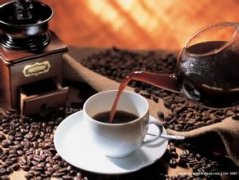
St. Cristobal Island in the Galapagos Islands breeds the best quality coffee in the world-
The best Ecuadorian coffee is grown on St. Cristobal Island in the Galapagos Islands, which has the unique natural geographical conditions for giving birth to the best quality coffee in the world. A cup of Galapagos coffee, like the beautiful scenery of the Galapagos Islands, is sure to impress you. In the mid-15th century, fishermen fishing in the western Pacific Ocean of South America were in the middle stream.
Coffee producing countries of Ecuador introduce San Cristobal Hasunda Coffee Garden
In the mid-15th century, there were legends about enchanted mysterious islands among fishermen fishing in the western Pacific Ocean of South America. It is said that the islands can sometimes be seen clearly from a distance, but when the ship approaches, it disappears again; sometimes it looks like a galleon, sometimes it shows the shape of a witch. The fishermen called these islands Magic Island and thought it was there.